




Introduction to Kotlin and Java
In the world of software development, choosing the right programming language can make a significant difference in project performance and team productivity. Kotlin and Java are two of the most popular languages in the realm of Android development. Although they both run on the Java Virtual Machine (JVM) and share similar syntax, they cater to different needs and come with their own strengths and weaknesses.
Key Differences Between Kotlin and Java
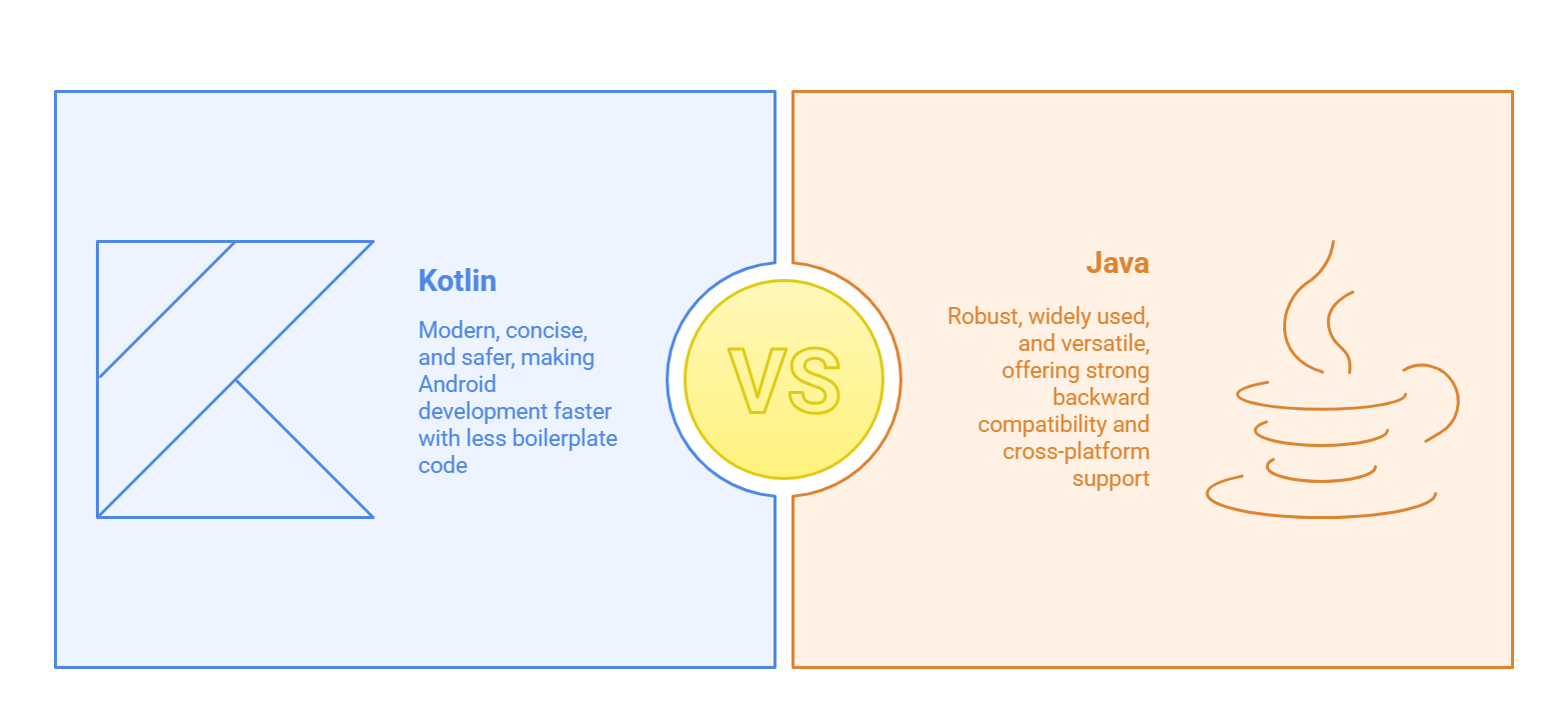
While Java has been a staple in programming since 1995, Kotlin has emerged as a modern alternative introduced in 2011. Here are some notable differences that set them apart:
Main Differences
- Kotlin is more concise and expressive than Java, reducing boilerplate code.
- Kotlin supports null safety inherently, preventing null pointer exceptions.
- Java requires extensive use of getter and setter methods, while Kotlin uses properties.
- Kotlin uses coroutines for asynchronous programming, simplifying concurrency.
Pros and Cons of Kotlin
Kotlin has rapidly gained popularity due to its modern features and streamlined syntax. However, like any programming language, it has its strengths and challenges.
Advantages of Kotlin
- Interoperable with existing Java code, allowing for easier transitions.
- More expressive syntax eliminates repetitive code.
- Offers advanced features such as extension functions and higher-order functions.
Pros and Cons of Java
Java has a long-standing reputation in enterprise-level applications. It boasts a vast ecosystem and a strong community. Yet, it comes with its fair share of drawbacks.
Advantages of Java
- Extensive documentation and community support.
- Availability of numerous libraries and frameworks.
- Stable and widely used in large-scale enterprise applications.
Conclusion: Which One Should You Choose?
Choosing between Kotlin and Java ultimately depends on the specific needs of your project and the expertise of your development team. If you're starting fresh or focusing on Android development, Kotlin is certainly worth considering for its modern features and ease of use. However, if you're maintaining legacy systems or require robust enterprise-level applications, Java remains a solid choice.
Just get in touch with us and we can discuss how ProsperaSoft can contribute in your success
LET’S CREATE REVOLUTIONARY SOLUTIONS, TOGETHER.
Thanks for reaching out! Our Experts will reach out to you shortly.